
BSW Tax Blog

Federal and Louisiana Taxes

Obama, Boehner, Reid Pass Budget Blame While Taxpayers Wonder: Who’s On First?

Time to Make a Move: New Law Allows for LLCs to Change their State of Organization

 Jacob_Roussel_10252012

Jacob E. Roussel

Associate—                                                                Baton Rouge Phone: 225.381.3172 Fax: 225.387.5397 jacob.roussel@bswllp.com

A new law in Louisiana will allow a limited liability company (LLC) to change its state of organization from Louisiana to any other state as well as allow for LLCs formed in another state to convert into a Louisiana LLC. The new law (R.S. 12:1308.3) was passed in the 2012 regular legislative session (Act 476) and will become effective on January 1, 2013. The process of transferring an LLC to a different state is called conversion in Louisiana. Some states use the term domestication to refer to this process.

Currently, LLCs organized in another state can obtain a certificate to transact business in Louisiana. However, internal governance of the LLC and the liability of its managers and members that arise solely out of their positions as managers and members are still governed by the laws of the state of organization. Other states have similar laws which allow LLCs to transact business in their state. One current method by which LLC members may elect to change the laws under which an LLC is governed is through the use of mergers or consolidations. This new law allows for either an LLC formed in another state to continue its existence in and under the laws of Louisiana, or allows for an LLC formed in another state to continue its existence under the laws of Louisiana. The new process allows for mobility and continued existence without the necessity for mergers or consolidations.

LLCs will be afforded this new flexibility provided that the conversion is not prohibited by the laws of the other state involved. The change must be authorized by a majority of the members of the LLC (or a greater vote if required by the LLCs own articles of organization or operating agreement). Finally, certain filing requirements with the Secretary of State must be accomplished to effectuate the change.

Members of an LLC benefit from having broad flexibility in determining the internal affairs of their company and set up their operational framework in an operating agreement. Issues not addressed in the operating agreement are governed by the default rules determined by the laws of the state of organization. Therefore, it is important for a company considering taking advantage of this law to be aware of the default rules in the new state which will govern the company. One should consult with an attorney familiar with the laws of the state to which the LLC is transferring and determine if it is necessary to amend the operating agreement. One should also consult with a tax professional to ensure that all requirements are met, which may vary depending on the new state of organization.

Whether you are a large regional company with subsidiary LLCs taking on projects in a market that is shifting locations or a smaller business looking to relocate, Act 476 provides new and important foundation for determining if it’s time to make a move.

Employee or Independent Contractor? Why Does It Matter?

Jerry L. Stovall, Jr.
jls@bswllp.com

Outline of Presentation Made to Lake Charles CPA Society In October 2012

PURPOSE     To provide an overview of the criteria for determining whether an individual should be classified and treated as an employee or independent contractor and to review the risks that may arise from improper classification.

●          ENFORCEMENT      Department of Labor and Internal Revenue Service have recently announced that they plan to step up enforcement of correct categorization of employee v. independent contractor.

●          WHY SHOULD YOU CARE?         Costs, including taxes; Legal implications, Liability
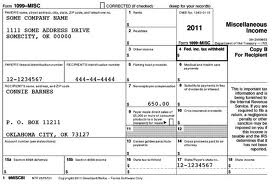
●          EMPLOYEE OR INDEPENDENT CONTRACTOR?

1)      Behavioral – Right to Control – Manner in which the job is done
2)      Financial Economic Realities – Does employer control business aspects of worker’s job (expense reimbursement, provide tools/supplies/insurance…)?
3)      Type of Relationship – Are there written contracts or employee type benefits (pension, insurance vacation)?  Will relationship continue?  Is the work performed integral to employer’s business?  Worker opportunity for profit/loss and ability to take other jobs.
4)      “Right to Control” – Typically used by IRS for purposes of wage withholdings.
5)      “Economic Realities” – Usually used for FLSA, Title VII, Age Discrimination in Employment Act, ADA and FMLA.

●          IRS 20 FACTOR TEST         This test helps analyze the degree of control over manner and method of work

1)      Instructions
2)      Training
3)      Integration
4)      Services rendered personally
5)      Hiring, supervising and paying assistants
6)      Continuing relationship
7)      Set hours of work
8)      Full-time required
9)      Working on employer premises
10)  Order or sequence set
11)  Oral or written reports
12)  Payment by hour, week, month
13)  Payment of business and/or traveling expenses
14)  Furnishing tools and materials
15)  Significant investment by the worker
16)  Opportunity to realize profit or loss
17)  Opportunity to work for more than one business at a time
18)  Making services available to the general public
19)  The business’ right to discharge
20)  Workers’ right to terminate

●          THESE WILL NOT PROTECT YOU IF YOU MISCLASSIFY:

1)      Employee wanted to be treated as an independent contractor
2)      Employee signed a written contract
3)      Paid only in commission
4)      Has little supervision

●          SECTION 530 SAFE HARBOR

1)      Relief from retroactive assessment of federal tax liabilities
2)      Elements:  a)      Taxpayer did not treat individual as an employee for any period, and  b)      Taxpayer is consistent with treatment of individual as not being an employee, then  c)      Individual will not be an employee unless taxpayer did not have a reasonable basis for not treating individual as an employee.
3)      Reliance upon the following is a “reasonable basis”:  a)      Judicial precedent, published rulings, technical advice to taxpayer or a letter ruling to taxpayer;  b)      Past IRS audit of taxpayer and no assessment attributable to treatment of individuals holding substantially similar positions; or  c)      Long-standing recognized practice of a significant segment of the industry.

●          VOLUNTARY CLASSIFICATION SETTLEMENT PROGRAM

1)      September 2011
2)      Provides partial relief from retroactive federal employment tax assessments for eligible employers.
3)      Eligible = taxpayer consistently treated workers as non employees and filed 1099 forms for previous three (3) years.
4)      Tax payer must apply for program.
5)      Tax payer cannot be under audit regarding worker classification at time of audit.
6)      If accepted, tax payer must pay 10% of employment tax liability on compensation paid during most recent tax year.

●          COMMON WAYS EMPLOYERS ARE CAUGHT

1)      Unemployment benefit claim
2)      Unpaid wage claim
3)      LA “Payday” Statute (La. R.S. 23:631)
4)      State/Federal Charge of Discrimination/Harassment
5)      State/Federal wage audit
6)      Workers’ compensation claim
7)      Retirement
8)      DOL Audit
9)      Employee complaint/suit
10)  Union “drops a dime”

●          CONSEQUENCES OF IMPROPER CLASSIFICATION

1)      Unpaid wages (including overtime) and benefits
2)      Attorney’s fees
3)      Back taxes, plus interest and penalties
4)      Civil fines/criminal penalties
5)      Provide employee benefits, including health insurance and retirement
6)      Pay any misclassified injured employees workers’ compensation benefits
7)      Notice to workers (in some states)
8)      Employee claims:   a)        Overtime   b)       Pay Day Statute   c)       Employee benefit plans   d)      Retirement plans   e)       Unemployment   f)        Workers’ compensation

●          CASES

i)         Talbert v. American Risk Inc. Co., Inc. (C.A. 5 Tex. 2010)
ii)       Lindsley v. BellSouth Telecommunications, Inc. (C.A. 5 La. 2010)
iii)     Hopkins v. Cornerstone America (C.A. 5 Tex. 2008)
iv)     Lorentz v. Coblentz, (La. App. 1 Cir. 1992)
v)       Agencies that will come knocking:   (a)     IRS (withholding)   (b)    US D.O.L. (minimum wage and overtime)   (c)     NLRB (employee’s right to organize)  (d)    EEOC (anti-discrimination laws)  (e)     OSHA (workplace safety)  (f)     State agencies

●          BEST PRACTICES

1)       Enter into a written agreement with independent contractor before work begins:   i)         Identify individual as an independent contractor   ii)       Set complete list of tasks to be performed  iii)     Specify results to be obtained   iv)     Do NOT require daily or weekly reports  v)       Do NOT specify work hours or work schedule
2)       Ensure that there are differences between the way you handle employees vs. the way you handle independent contractors
3)       Ensure that there is consistency between similarly-situated employees
4)       Compliance check =         review contracts:   i)         review policies   ii)       review jobs
5)       Document agreements and duties
6)       Collect documents:  employer identification number, business licenses, professional licenses, insurance certificates, business cards, advertisements by contractor (yellow pages, news paper) and invoices.

●          IMPORTANT LESSONS

1)       “Independent Contractor” agreements do not save the day.
2)       Issuance of a Form 1099 rather than a W-2 is not dispositive.
3)       Don’t assume your classification is proper.  Carefully consider statutes, applicable jurisdiction, and all facts underlying the relationship.

The Tax Times: Tax Court upheld the denial of Installment Agreement where Taxpayer was Not Compliant

Robbing Peter to Pay Paul?

The Louisiana Department of Revenue announced today that it will enhance its Federal to State refund offset program to collect money owed other Louisiana Agencies.  The offset program will compare US government vendors to Louisiana debtors and seize any funds the US government is preparing to pay those vendors should they owe Louisiana money.  For those vendors involved with long term contracts with the US government, having its paymenst seized will likely jeopardize its payment of subcontractors’ and suppliers’ invoices.  Can the state’s economy survive the impact of cash flow arrest?

Sales Tax Software Questions Answered in Blog

Proposed Changes to State Income Tax Credits for Wind or Solar Energy Systems

Nicole Gould

The Louisiana Department of Revenue (LDR) has noticed its intent to revise the regulations affecting the state income tax credits for wind and solar energy systems (Wind/Solar Credits). The Wind/Solar Credits can be generally taken by the owner of a Louisiana residence or residential rental apartment for 50% of the first $25,000 for the purchase and installation costs of the wind or solar energy systems. The changes are not yet effective, but for those people in the planning stages of large projects, this could be critical information. The biggest change in the Wind/Solar Credit is to no longer qualify multiple systems per residence or residential apartment dwelling for the credit. The existing regulation permits the Wind/Solar Credits for each complete system upon a residence or apartment, and industry custom has used this to construct multiple complete systems in order to stack the credit for total construction costs in excess of $25,000. The proposed revision makes clear that only one wind or solar system will qualify for the credit. The other reductions to the credit include:

  1. The deletion of the ability to include uncapitalized finance costs as qualified system costs.
  2. Any replacement items added to an existing system cannot qualify for the credit. The credit will only apply to the purchase and installation of complete system.
  3. Tree trimming and removal costs are also being excluded from qualified system costs.
  4. Shared inverters are no longer a stated exception to having a complete system. Arguably, a system is incomplete and does not qualify if it shares an inverter with another system, a likely scenario with apartments.
  5. Solar energy systems will have additional construction and certification requirements before qualifying.

But where something is taken away, something is given. The credit currently permits “mounting systems” as part of eligible costs for the solar energy system credit. The regulation revision will specifically allow costs for a free-standing, ground-mounted solar energy system, which is a separate structure from the residence. The revision permits costs for the structure and its foundation that are necessary to mount the solar energy system to the specified height. The allowed structure costs do not include additional walls, interior finishes, foundations, roofing structures not directly related to the solar energy system, or any other any other addition not directly related to the solar energy system. If you’re thinking of gazebos, car/boat ports, and the like, then you see the added benefit to the revision. The LDR will hold a hearng on the proposed changes on September 27, 2012, and if there are no objections or changes, the revisions will eventually take effect.

UPDATE: These changes were promulgated at LAC 61.I.1907

Hurricane Isaac Tax Relief

Lance J. Kinchen
lance.kinchen@bswllp.com

On September 5, 2012, following recent disaster declarations by the Federal Emergency Management Agency, the IRS announced that affected taxpayers in Louisiana and Mississippi will receive some tax relief.

Following Hurricane Isaac, the President declared the following parishes a federal disaster area:  Ascension, Assumption, East Baton Rouge, East Feliciana, Iberville, Jefferson, Lafourche, Livingston, Orleans, Plaquemines, St. Bernard, St. Charles, St. Helena, St. James, St. John the Baptist, St. Mary, St. Tammany, Tangipahoa, Terrebonne, Washington and West Feliciana.

As a result, the IRS has postponed certain deadlines for taxpayers who reside or have a business in the designated disaster area.  Under §7508A, the IRS has given affected taxpayers until January 11, 2013 to file most tax returns or to make tax payments, including estimated tax payments, that have either an original or extended due date occurring on or after August 26, 2012 and on or before January 11, 2013.  This includes the quarterly estimated tax payment due on September 17, 2012.  Furthermore, it includes corporations and businesses that previously obtained an extension until September 17, 2012 to file their 2011 returns and individuals and businesses that received a similar extension until October 15.

The IRS will abate any interest, late payment or late filing penalties that would otherwise apply.  In addition, the IRS is waiving failure-to-deposit penalties for federal employment and excise tax deposits normally due on or after August 26 and before September 10 if the deposits are made by September 10, 2012.

The Louisiana Department of Revenue (“LDR”) is granting similar state tax relief to affected taxpayers.  In addition to the parishes listed above, LDR has also granted state tax relief to East Baton Rouge, East Feliciana, Pointe Coupee, West Baton Rouge and West Feliciana.  LDR will waive any late filing penalties, late payments penalties and interest that would otherwise apply.  Any return or amount on which penalties or interest begin accruing before August 26, 2012 will not be eligible for this relief.

As a result, affected individuals and businesses will have until February 11, 2013 to file these state returns and pay any state taxes due.  This includes individuals and corporations that previously obtained an extension until November 15, 2012, to file their 2011 income tax returns.  It also includes the state estimated tax payment for the third quarter of 2012, due September 17, 2012.

Please consult your CPA or tax advisor on whether you qualify for such tax relief.

Louisiana Taxpayers Get Deadline Relief Due to Hurricane Isaac

Revenue Information Bulletin No. 12-029

September 12, 2012

Tax Relief to Individuals and Businesses Affected by Hurricane Isaac Return Filing and Tax Payment Deadlines Extended

New Orleans assessment rolls open Wednesday for two-week window | NOLA.com

New Orleans assessment rolls open Wednesday for two-week window | NOLA.com.

Beginning Wednesday morning, New Orleans property owners unhappy with their 2013 tax assessments will have a two-week window to visit the Orleans Parish Assessor’s offices.

Some commercial and residential property owners recently received a formal notice in the mail noting that their properties increased or decreased in value, Assessor Erroll G. Williams said in a news release. Those wishing to challenge that assessment should visit either of the assessor’s two offices between 8:30 a.m. and 4 p.m., weekdays, until Aug. 15. The Assessor’s East Bank office is on the fourth floor of City Hall at 1300 Perdido St. The West Bank office is at the Algiers courthouse at 225 Morgan St.

Appointments are not accepted and the crowd will be seen on a first-come, first-served basis.

Property owners wishing to pitch a change in estimated property values are asked to bring the letter from the assessor’s office, a recent appraisal, a builder’s contract, causality insurance coverage and dated photographs of the interior and exterior of the property.

“Tax assessments are based on estimated fair market value. Reliable documentation and information is needed to challenge an assessment made by my office,” Williams wrote in a statement. “My office does not set the tax rate.”

If a property owner is still unhappy with their assessment after meeting with an assessor during open rolls, they can file an appeal with the Orleans Parish Board of Review before Aug. 20.

Additional information is available at http://nolaassessor.com/.

Design a site like this with WordPress.com
Get started